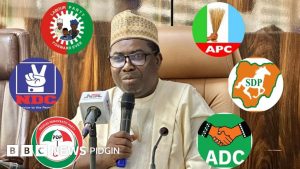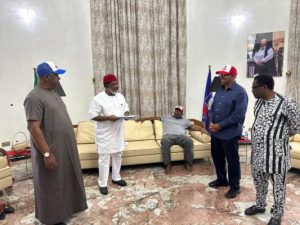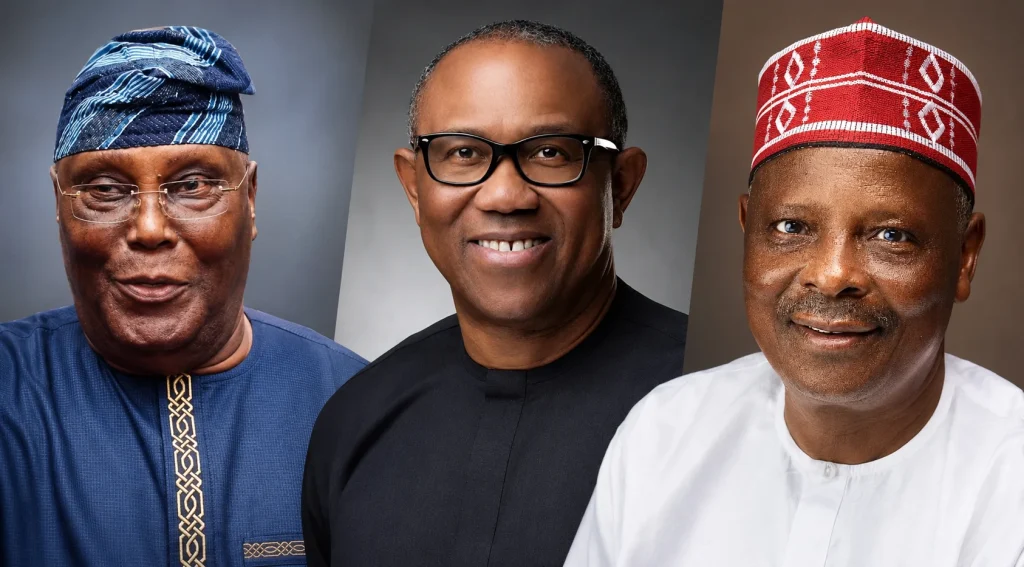
Ahead of the 2027 presidential election, Nigeria’s opposition landscape has been thrown into fresh uncertainty following the exit of Peter Obi and Rabiu Kwankwaso from the African Democratic Congress (ADC).
The development has deepened cracks within the opposition coalition and triggered mixed reactions over the prospects of a possible Obi-Kwankwaso presidential ticket on the platform of the Nigeria Democratic Congress (NDC) against President Bola Tinubu and the ruling All Progressives Congress (APC).
Coalition Collapse Raises Questions
Obi, leader of the Obidient Movement, and Kwankwaso, head of the Kwankwasiyya Movement, had previously aligned with former Vice President Atiku Abubakar under the ADC in what many observers initially described as a formidable opposition coalition.
In the 2023 presidential election, Obi contested under the Labour Party (LP), while Kwankwaso ran on the platform of the New Nigerian People’s Party (NNPP). According to the Independent National Electoral Commission (INEC), Obi secured over six million votes and won 12 states, while Kwankwaso clinched victory in Kano State.
Their alliance under ADC had sparked optimism among supporters who believed a united opposition could pose a strong challenge in 2027. However, the subsequent collapse of the merger has now cast doubt on that projection.
Dalung: Obi-Kwankwaso Ticket Has Slim Chances
A former Minister of Sports and Youth Development and ADC chieftain, Solomon Dalung, described the duo’s departure as disappointing and politically unwise.
Dalung argued that the coalition was built on the principle of collective sacrifice to rescue Nigeria’s democracy, not personal ambition. He maintained that the ADC remains better positioned electorally, citing what he described as the party’s swelling support base, including elements of former President Muhammadu Buhari’s traditional support bloc.
According to him, even a combined Obi-Kwankwaso ticket may struggle to defeat Tinubu in 2027, especially given shifting political alignments in key states like Kano and parts of the North-Central.
Analysts: Politics Is About Strategy
However, Abuja-based political analyst Jide Ojo offered a different perspective, noting that defections are part of political strategy and constitutional rights.
Ojo suggested that remaining in ADC could have left Obi and Kwankwaso overshadowed by Atiku’s influence, especially amid speculations that Atiku might seek the presidential ticket again. He added that politicians must take calculated risks, pointing out that upsets are not uncommon in Nigerian politics.
He referenced the unexpected outcome of the 2015 election, where then-incumbent President Goodluck Jonathan lost re-election, as evidence that electoral surprises remain possible.
Zoning Debate Resurfaces
The realignments have also reignited debates around zoning — the informal power-sharing arrangement between Nigeria’s North and South.
Media entrepreneur and former presidential aspirant Dele Momodu argued that zoning has become a political distraction, shifting attention away from pressing issues such as insecurity, electricity shortages and economic hardship. He alleged that regional politics is being amplified to divide voters rather than focus on governance.
Conversely, a founding member of the APC, Osita Okechukwu, defended zoning as a stabilising mechanism that promotes inclusion and national cohesion. He criticised suggestions that zoning is irrelevant, describing it as a moral convention with historical significance in Nigeria’s political evolution.
Fragmentation vs Possibility
With less than a year to major pre-election activities, observers remain divided. While some believe fragmentation could weaken the opposition and inadvertently strengthen the APC’s chances, others insist that political permutations can shift rapidly before 2027.
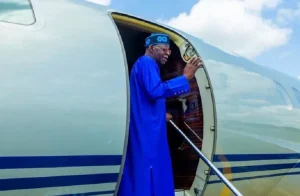
As coalition talks falter and new alignments emerge, the big question remains whether the opposition can overcome internal divisions to present a united front — or whether the fractured landscape will hand Tinubu and the APC a smoother path to re-election.
About The Author