Abuja, Oct. 15, 2025 — Nigeria has joined 55 other Commonwealth nations in a renewed push to unlock a projected $2 trillion intra-Commonwealth trade market by 2030, a move aimed at strengthening economic resilience, fostering sustainable growth, and lifting millions out of poverty.
The initiative was one of the major outcomes of the Commonwealth Finance Ministers’ Meeting held on the sidelines of the ongoing World Bank and International Monetary Fund Annual Meetings in Washington, D.C., United States.
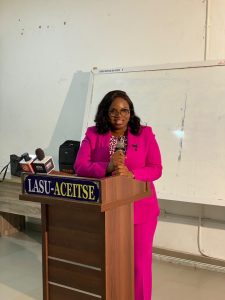
A statement issued by the Federal Ministry of Finance and signed by its Director of Information and Public Relations, Mohammed Manga, said the Nigerian delegation, led by Minister of State for Finance, Doris Uzoka-Anite, reaffirmed the country’s commitment to the Commonwealth’s trade and development agenda.
Uzoka-Anite, in her remarks, pledged Nigeria’s readiness to collaborate with other member nations to expand trade opportunities, deepen investment flows, and accelerate job creation and poverty reduction.
“With collective action and determination, the Commonwealth nations are set to achieve a brighter economic future, driving growth, prosperity, and improved livelihoods for millions across the Commonwealth,” she said.
The Commonwealth Secretariat noted that trade between member countries is, on average, 21 percent cheaper than trade with non-members an advantage attributed to shared languages, legal systems, and institutional frameworks that help reduce transaction costs.
According to the Secretariat, intra-Commonwealth trade could reach $2 trillion by 2030 if the bloc continues investing in trade facilitation, digital innovation, and regional connectivity.
The Commonwealth, an association of 56 countries most of which are former British colonies represents a population of over 2.5 billion people and a combined GDP exceeding $13 trillion.
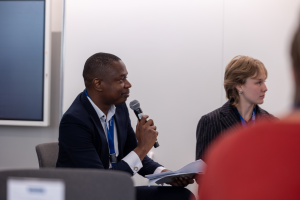
During the meeting, Commonwealth Secretary-General Shirley Ayorkor Botchwey described the current period as one of the most challenging in modern economic history, citing rising debt, tightening development finance, and escalating climate costs.
“Growth is slowing. Debt vulnerabilities are rising. Development finance is tightening just when the climate crisis demands more of our resources. But if the storm is real, so too is the opportunity,” Botchwey said.
She emphasised the need to leverage the “Commonwealth Advantage” shared historical ties, institutional similarities, and trade linkages to enhance cooperation and build collective resilience.
Botchwey also announced that 2026 would be designated the ‘Commonwealth Year of Resilient, Innovative, and Sustainable Debt,’ marking 40 years of the bloc’s debt management programme, which pioneered tools such as blue bonds, catastrophe bonds, and the Commonwealth Meridian system now used in 41 countries.
The Secretary-General further revealed plans to establish a Resource Mobilisation Directorate to attract new funding for digital education, skills development, and infrastructure across member states.
She urged governments to honour commitments to the Commonwealth Fund for Technical Cooperation, stressing that sustainable institutional funding was critical to achieving the bloc’s reform and development objectives.
“Our task is not merely to manage debt. It is to build a global financial architecture that is inclusive, responsive, and structured for shared prosperity,” Botchwey said.
“If we stand together, we can turn today’s headwinds into tomorrow’s pathways of growth and opportunity for every Commonwealth nation.”
Analysts believe Nigeria’s participation could strengthen its export capacity under the African Continental Free Trade Area (AfCFTA) and help attract new investment, aligning with the government’s broader economic diversification drive.
About The Author