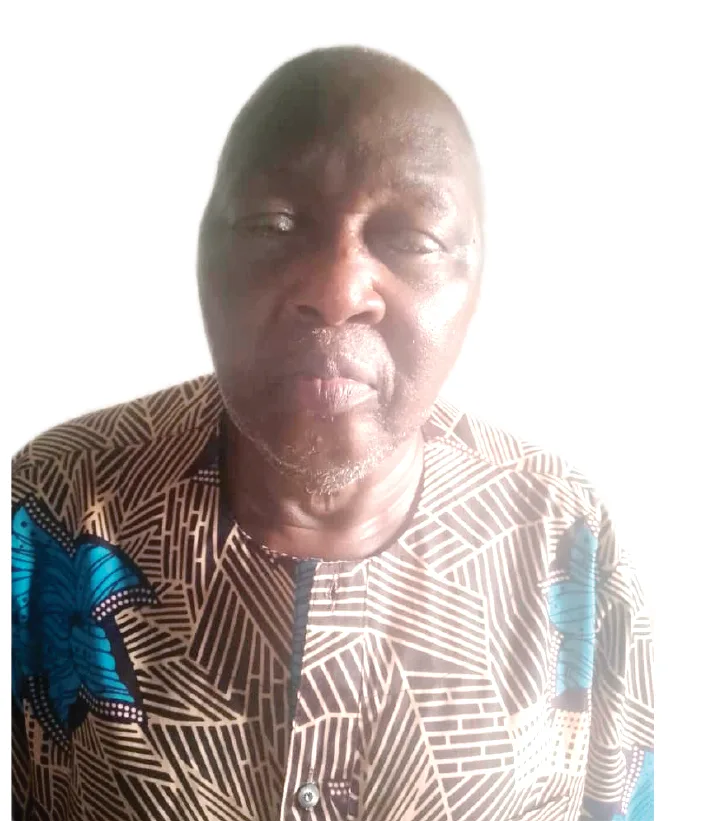
A retired plastics engineer in Ogun State says he has been waiting for years for compensation promised when his property was pulled down for a road project from Agbara towards Atan. The demolition happened between February and March 2022. It took six shops and a three-bedroom flat, along with the church his wife leads. He says the loss has cost him his income, his home and, increasingly, his health.
The man, who isn’t named in the interview, spoke about his experience and about a recent protest by affected property owners. The account below is his. The source carries no response from the government.
A retirement plan reduced to rubble
The man has a master’s degree and worked for years in plastics, including at one of Nigeria’s biggest plastics companies, with jobs across the north, east and south-west. After he retired, he settled in Atan, Ogun State, having spent most of his life in Lagos.
The property was his plan for old age. He rented out the six shops, and the money covered his daily needs. His wife also used one of them. “The six shops were practically my lifeline,” he said.
He suffered a head injury in an accident in 2012 that affected his eyesight, and his condition slowly got worse. The rent mattered even more because of that.
His wife, a prophetess, ran her Cherubim and Seraphim church on the same property. It was a properly built church with plastered, painted walls and a POP ceiling, on about half a plot, while the residential building stood on a full plot. Members now worship under a temporary canopy because the family can’t afford to rebuild.
Seven days’ notice and a promise of compensation
The family got seven days’ notice before the demolition. He said a notice didn’t mean they were ready for what followed or had somewhere else to live.
Officials told them they would be compensated and asked owners to submit property documents and photographs of their buildings. He handed over several documents, and his wife took photographs of the structures. They complied because they believed it was the first step toward being paid. But nobody said how much they would get or when. “We held on to the assurance that the government would not leave us stranded,” he said.
Life after the demolition
For two years he stayed with a friend who was also a landlord, which he found hard at his age. He now lives in Odugbemi, Atan, about 10 minutes from Atan, in a two-bedroom flat his children put up. The building is unfinished, with no plastering, no ceiling and no doors, and he sleeps on the floor.
He’s lost the rent he lived on and now relies largely on help from old classmates. “Even feeding has become a struggle,” he said.
His eyesight has worsened to the point where he can barely see, and he can’t afford further treatment. His children’s limited resources went into the house he lives in. His health also makes it hard for him to attend meetings, write letters or deal with officials alongside other affected owners.
His attempts to get paid
He says he personally delivered letters to the Governor’s Office and the Federal Ministry of Works, among other offices. He still has copies and acknowledgement receipts showing they were received. Nothing came of it.
He said other affected owners also wrote to the government to explain their situation and ask for the promised compensation, and heard nothing back. That is why they recently protested, he said, to bring their complaints to the right authorities, including the President.
Why he feels left out
He said some owners whose properties were demolished elsewhere between 2024 and 2025 have been paid, some reportedly substantial amounts. Owners along the Atan-to-Sokoto axis were compensated, he said, while people on the Agbara Road axis, which he also described as the Atan-Lusada-Agbara axis, were left out. Some owners, he added, were paid as recently as two or three months ago. “Why were we excluded?” he asked.
He said some affected owners have died while waiting, and others are seriously ill or bedridden. A landlord who personally appealed to the governor for help died about a year later. Some owners have become tenants, and many lost shops, businesses or rental income they depended on.
What he wants
He wants the Federal Government to pay what it promised. “We are not looking for trouble,” he said, and the owners want no violence or confrontation. “We want justice and the opportunity to rebuild our lives.”
“Behind every demolished property is a human being and a family,” he said. “How much longer are we expected to wait?”
About The Author