Nigeria is approaching the end of 2026 with a mixture of cautious optimism, economic challenges and renewed expectations. Across the country, developments in the economy, financial markets, politics, technology and infrastructure suggest that the nation is entering another important phase in its development journey.
One of the most encouraging developments is the gradual slowdown in inflation. Nigeria’s headline inflation rate dropped to 14.06 percent in October 2026, down from 14.63 percent in September. This represents its lowest level in six years and offers some relief to households and businesses that have struggled with rising prices.
The decline has raised expectations that the Central Bank of Nigeria could consider reducing interest rates at its final major monetary policy meeting of the year. Such a decision could make borrowing cheaper, encourage investment and provide some support for businesses. However, Nigerians will be watching closely to see whether the slowdown in inflation translates into meaningful improvements in their everyday lives.
Meanwhile, Nigeria’s capital market is attracting significant attention as major investment activities gather momentum. The Nigerian Exchange Group has acquired a 10 percent strategic stake in the Nairobi Securities Exchange, strengthening financial connections between two important African markets.
Another major development is the proposed Dangote Refinery initial public offering (IPO). The offer has reportedly attracted approximately $4 billion in bids, demonstrating strong investor interest. The IPO is expected to provide retail investors with an opportunity to participate in one of Africa’s most ambitious industrial projects.
However, the enthusiasm surrounding the investment market contrasts with challenges facing Nigeria’s infrastructure. The Apapa and Tin Can Island ports, two of the country’s most important maritime gateways, continue to struggle with ageing facilities as a planned N1.3 trillion reconstruction programme stalls. The situation raises concerns about trade efficiency, logistics costs and Nigeria’s ability to compete internationally.
The agricultural sector is also facing questions about the country’s capacity to turn investment into real economic transformation. Despite a $538 million agricultural development plan, concerns have emerged over the absence of sufficient processing factories. Farmers may successfully produce large quantities of crops, but without factories to process and preserve their harvests, much of that agricultural value could be lost.
In the manufacturing sector, pharmaceutical companies are taking steps to strengthen domestic production. Drugmakers have reportedly invested N29 billion in factories and machinery, signalling efforts to expand local manufacturing capacity and reduce dependence on imported medicines.
Nigeria’s banking industry is also preparing for another important phase. With banks holding a combined N55.7 trillion loan portfolio, expectations are growing that recapitalisation could strengthen their ability to finance businesses, infrastructure and economic activities.
Beyond finance and manufacturing, Nigeria is making progress in the technology and telecommunications space. The country has secured a seat on the International Telecommunication Union (ITU) Council for the 2027–2030 term, joining other African countries in shaping global telecommunications policy.
Across Africa, telecommunications companies are also changing their business models. Data services are increasingly becoming more important to their revenues than traditional voice services, reflecting the continent’s growing dependence on digital connectivity.
Yet, Nigeria’s growing digital economy faces a major challenge: reliable electricity. As demand for artificial intelligence and data centres increases, the country risks becoming trapped in fossil-fuel dependence unless it invests more aggressively in renewable energy and sustainable power infrastructure.
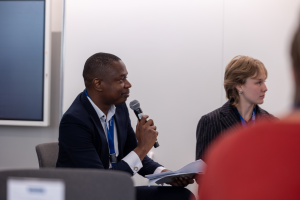
The political environment is equally significant as Nigeria approaches the 2027 general elections. At a recent BusinessDay Town Hall in Lagos, governorship candidates presented competing ideas on how to address housing shortages, unemployment and other urban challenges.
Political tensions are also increasing. Former presidential candidate Peter Obi has condemned an alleged attack on Rabiu Kwankwaso’s convoy and called for those responsible to be arrested. Meanwhile, political leaders are expressing concern that rising violence could undermine investor confidence ahead of the elections.
The Senate is also expected to transmit the State Police Bill to President Bola Tinubu after 32 state assemblies reportedly supported the proposal. If successfully implemented, state policing could significantly change Nigeria’s security structure, although questions about accountability, political interference and funding remain important.
Across the African continent, economic developments present both opportunities and warnings. South Africa’s unemployment rate has reached 33.7 percent, highlighting the persistent employment crisis facing Africa’s most industrialised economy. Senegal is also facing financial difficulties after the International Monetary Fund withheld a $2.2 billion loan over concerns about hidden debt and budget disagreements.
At the same time, Morocco and Ghana are emerging as increasingly important startup investment destinations, suggesting that Africa’s technology funding landscape may become more diversified.
In sports, Belgium’s legendary striker Romelu Lukaku has announced his retirement from international football after scoring 94 goals in 135 appearances for his country, bringing an end to an important chapter in Belgian football history.
The Bigger Picture: What Does All This Mean for Nigeria?
Taken together, these developments tell a larger story about a country attempting to stabilise its economy while positioning itself for long-term growth.
Inflation is slowing, investors are showing renewed interest in major Nigerian businesses, pharmaceutical manufacturers are expanding production, and the country is strengthening its influence in global technology governance.
However, serious obstacles remain. Inadequate infrastructure, unemployment, insecurity, weak agricultural processing capacity and uncertainty surrounding public investment continue to limit the country’s economic potential.
The central question is no longer simply whether Nigeria can attract investment or announce ambitious development programmes. It is whether those investments and promises can translate into functioning infrastructure, productive industries, better-paying jobs and improved living conditions.
Nigeria may be showing signs of economic recovery, but the real test will be whether ordinary Nigerians can feel the difference.
(source: businessday.ng )
About The Author