Amid Nigeria’s deepening security crisis, fresh details from the Federal Government’s Open Treasury Portal have sparked widespread concern, revealing that only a small fraction of funds allocated for security equipment in the 2025 budget was disbursed.
The disclosure comes against the backdrop of renewed violent attacks across Borno, Kaduna, Katsina and Benue states during the Easter period, which claimed scores of lives, including five police officers, and displaced many residents.
On March 17, at least 25 people were killed in coordinated explosions at the gate of the University of Maiduguri Teaching Hospital, the Monday Market Roundabout and the Post Office in Maiduguri, Borno State. Reports indicated that Boko Haram and ISWAP militants carried out multiple attacks on military formations across Borno, resulting in the deaths of soldiers and civilians.
Several senior military officers were also among those who lost their lives during the attacks.
A security consulting firm, Beacon Security Intelligence Limited, reported that more than 10,000 people were killed in Nigeria between January and December 2025. Between January 1 and October 31, 2025, 9,514 deaths were recorded. In November, at least 404 people were killed and 363 abducted, while December saw 323 fatalities in the North West and 241 in the North Central, with the northern region accounting for over 91 percent of recorded deaths during that period.
In the first quarter of 2026 alone, over 2,350 Nigerians were reportedly killed and 1,117 abducted.
Despite the worsening security situation, budget performance data show that of the N20.56 billion allocated to the Nigerian Army in 2025 for the purchase of security equipment, only N1.46 billion, representing 7.11 percent, was released as of December 31, 2025.
Although the 2026 Appropriation Bill was signed into law at N68.32 trillion, the implementation of the 2025 budget was extended to June 31, 2026. Meanwhile, Nigeria’s public debt rose to N159.28 trillion as of December 2025, alongside the approval of a fresh $6 billion loan by the Senate.
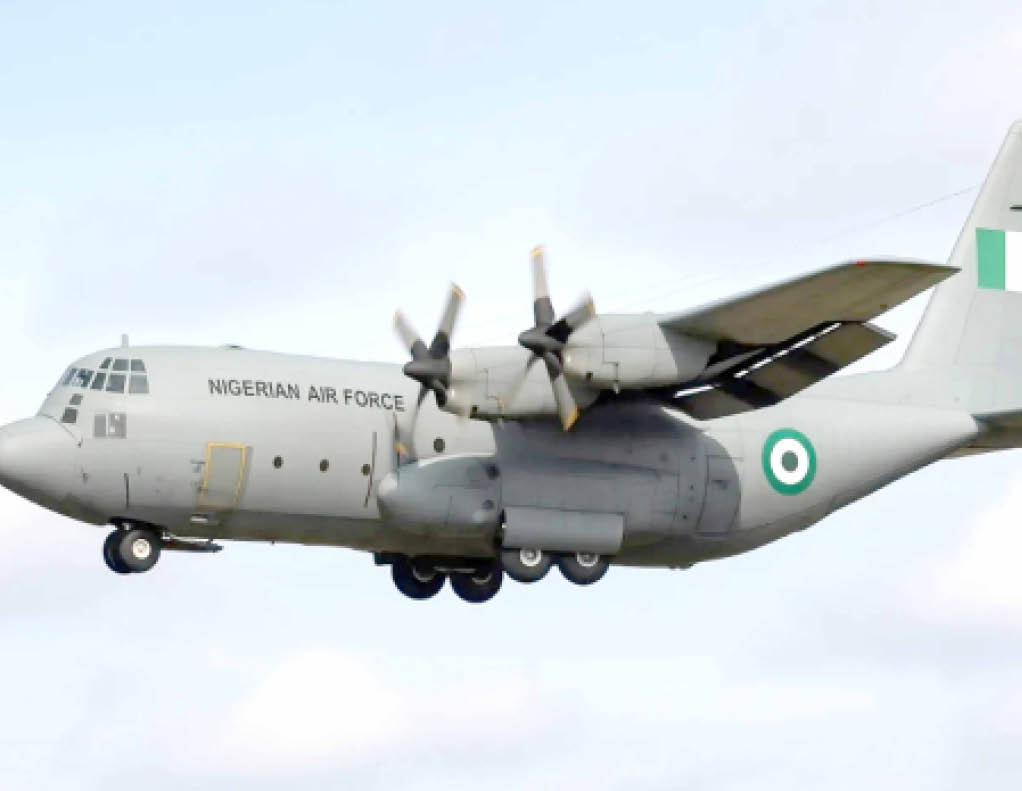
Out of the N4.52 trillion proposed by the Army for total expenditure in 2025, only N1.17 trillion, or 25.94 percent, was disbursed by year-end. For the Air Force, N238.32 billion of its N1.25 trillion allocation was released, representing 19.04 percent.
For defence equipment procurement, the Army received N16.71 billion out of N336.76 billion budgeted, amounting to just 4.96 percent. Funds for the construction and repair of defence equipment also recorded low implementation rates of about 10 percent and 9 percent respectively.
Several key areas reportedly received no funding at all, including transport equipment fuel costs, aircraft fuel costs, promotion and recruitment, construction of military barracks and research and development.
Similarly, aircraft maintenance for the Nigerian Air Force suffered low releases. Of the N34.71 billion budgeted, only N4.85 billion, or 13.98 percent, was disbursed. In contrast, N20.27 billion out of N20.74 billion allocated for the presidential air fleet was released, representing nearly 98 percent implementation.
For Air Force security equipment procurement, N5.25 billion out of N15.75 billion was released, while only 6.45 percent of the N298.44 billion budgeted for defence equipment was disbursed.
Security analysts have warned that the funding gap has significantly undermined the military’s capacity to effectively combat terrorism, banditry and other violent crimes, particularly in the northern region.
Experts have called for the full release of security funds and a comprehensive overhaul of the procurement system to eliminate political interference and ensure accountability. They also stressed the need to provide frontline troops with adequate armoured vehicles, modern weapons and secure communication systems.
With insecurity continuing to escalate, stakeholders have urged urgent action, warning that failure to address the funding shortfall could further weaken Nigeria’s security architecture and endanger more lives.
About The Author