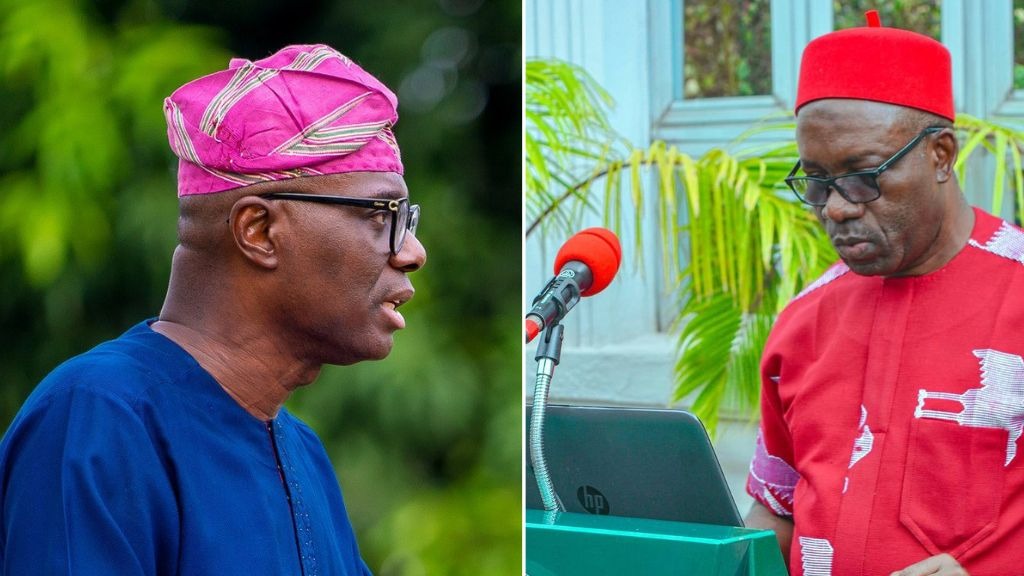
As Nigeria marks Democracy Day on June 12, the annual civic engagement forum The Platform is set to host an influential lineup of speakers, including Anambra State Governor Prof. Charles Chukwuma Soludo and Lagos State Governor Babajide Sanwo-Olu, in what promises to be a high-impact discourse on governance, reform, and national development.
Organized by Covenant Nation, The Platform has evolved into one of Nigeria’s most respected intellectual gatherings, drawing public figures, policymakers, thought leaders, and civil society actors to engage in constructive dialogue on Nigeria’s socio-political future.
This year’s edition, themed “Democracy and Economic Transformation: The Leadership Imperative,” will take place in Lagos and will also feature leading voices from academia, civil society, and the business sector.
According to the convener, Pastor Poju Oyemade, the event is intended to provoke thoughtful reflection on the state of Nigeria’s democracy and the role of visionary leadership in addressing the nation’s mounting economic and social challenges.
“We’re not just marking another public holiday—we’re creating space for a national rethink,” Oyemade said during a pre-event briefing. “Our focus is to inspire leadership that is transformational, not transactional.”
Governor Soludo, a former Central Bank governor and a vocal advocate of structural reforms, is expected to speak on fiscal federalism and the urgent need to align governance with economic productivity. Governor Sanwo-Olu, who leads Nigeria’s commercial nerve center, is slated to address the dynamics of urban development, public-private partnerships, and social investment in a post-subsidy era.
Past editions of The Platform have featured influential figures such as Vice President Yemi Osinbajo, former CBN Governor Sanusi Lamido Sanusi, and Nobel Laureate Prof. Wole Soyinka.
This year’s event takes place at a time of growing public concern over economic hardship, rising insecurity, and questions surrounding democratic accountability—making the dialogue all the more relevant.
Analysts see The Platform as an important barometer of elite thinking and a potential catalyst for policy reform and political consensus.
Admission to the event is free but highly competitive, with organizers confirming a full-capacity audience and live broadcasts on national television and digital platforms.
The Federal Capital Territory Administration (FCTA) has stirred a wave of public reactions following its decision to rename the iconic International Conference Centre (ICC) in Abuja to the Bola Ahmed Tinubu International Conference Centre, while simultaneously announcing the discontinuation of several free public services previously available at the facility.
The announcement, made late Tuesday by the FCTA Director of Press, was described as part of a broader “rebranding and cost-recovery initiative” to reflect the “current leadership’s legacy and direction.” However, the move has sparked a heated debate across political, civil society, and professional circles.
Critics argue that the renaming of the ICC—long considered a national and neutral venue for global and domestic events—injects partisan undertones into a public monument.
“This is not just a name change; it’s a rewriting of public identity,” said Professor Emmanuel Ayodele, a political historian at the University of Abuja. “The ICC belongs to all Nigerians, not any single political figure.”
Adding to the controversy is the FCTA’s decision to cancel a range of free public services previously offered at the ICC, including complimentary event access for non-profit organizations, discounted bookings for educational institutions, and free cultural exhibitions.
Under the new policy, all event organizers—regardless of purpose—will be subject to revised commercial rates. The FCTA cited financial sustainability as the main reason behind the policy shift, pointing to rising maintenance costs and budgetary constraints.
“We must reposition our assets to generate revenue and reduce dependency on federal subventions,” said FCT Minister Nyesom Wike in a statement. “The renaming of the ICC is symbolic of a new era, and our pricing policy must reflect economic realities.”
The move has drawn backlash from several quarters, including opposition politicians, civil society groups, and even members of the arts and culture sector who view the ICC as a crucial space for public engagement.
“This administration seems determined to commercialize every public asset while politicizing what should be shared national symbols,” said PDP spokesperson Debo Ologunagba in a press briefing.
Meanwhile, supporters of President Bola Tinubu have welcomed the renaming, describing it as a “fitting tribute” to a leader they say has demonstrated bold reforms and national leadership.
As the debate intensifies, there are growing calls for the National Assembly to step in and review the FCTA’s powers over heritage and national symbols within the capital.
About The Author