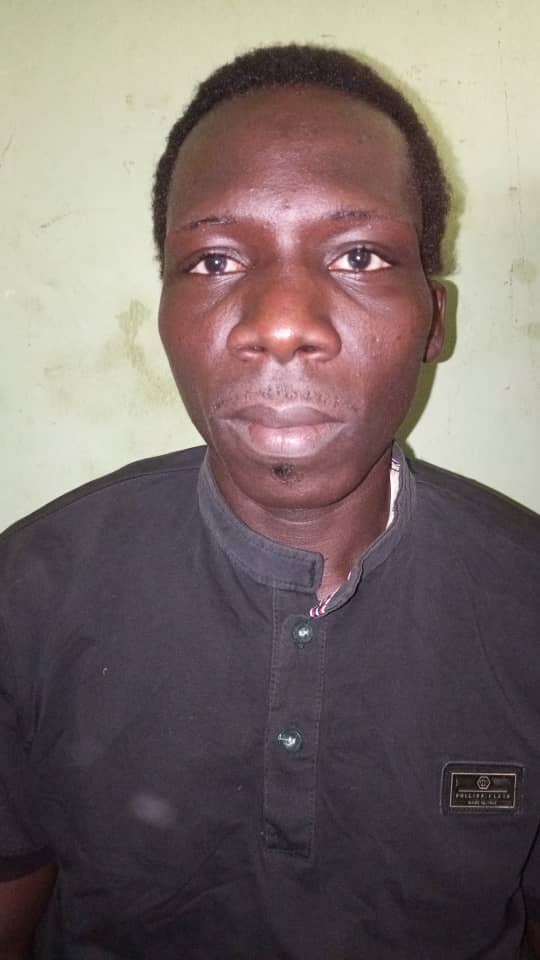
A member of the United States House of Representatives, Riley Moore, has urged the Nigerian government to grant a pardon to Sunday Jackson, a farmer sentenced to death for killing a herdsman during a 2015 confrontation in Adamawa State.
Moore, a Republican lawmaker, made the appeal on Thursday during a US House hearing on President Donald Trump’s redesignation of Nigeria as a Country of Particular Concern over religious freedom and security issues.
Describing Jackson’s conviction as unjust, Moore said the farmer acted in self-defence.
“I would urge the Nigerian government to take a look at pardoning Sunday Jackson, who is an individual who was fighting for his own life, defending his life against one of these Fulani militants,” he said.
“That Fulani militant lost his life in that struggle, and now that person, Sunday Jackson, is facing the death penalty. Where is the justice in that?”
Moore also questioned Nigeria’s handling of insecurity in the Middle Belt, alleging that armed herders continue to operate freely while residents face prosecution.
“Somehow these Fulani militants … they’re all armed. Why hasn’t there been some type of move by the Nigerian government to disarm these militants?” he asked, adding that they “have access to AK-47s and other small arms to slaughter Christians.”
Jackson’s case dates back to November 2015, when a confrontation broke out between him and a herdsman, Buba Bawuro, on his farm. Jackson claimed he was attacked and acted in self-defence. He was arrested and charged with murder.
After years of trial, a high court sentenced him to death in 2021, ruling that he used a recovered weapon to stab an unarmed Bawuro after the initial struggle. On March 7, 2025, the Supreme Court upheld the verdict, ruling that Jackson’s actions constituted retaliation rather than self-defence.
The judgment sparked public criticism, with many Nigerians questioning the dismissal of his self-defence claim and the broader handling of farmer-herder conflicts by the justice system.
Moore’s remarks add new international pressure on Abuja as human rights organisations and community groups continue to call for a review of the case.
About The Author